
★ In this story 02
Americans head to the polls in just a few days, and when they get there, they will find a new type of candidate on the ballot. Dozens running on the Democratic ticket are self-proclaimed socialists, those who openly embrace the tenets of socialism. They call themselves democratic socialists instead of just plain socialists, but, as is often said, it is a distinction without a difference.
Democratic socialists claim to want some sort of collectivist capitalism by rolling the two forms of government into one. Such coexistence has never succeeded. So what happens to a nation that turns to socialism? Well, we have a classic example of that in a country so rich in oil that its cup literally runneth over. In truth, socialism is a form of class warfare. It espouses equality but delivers despotic tyranny. A case in point: Venezuela.
To get a firsthand look at what happened in that country, we spoke with Pedro Burelli, who was born in Venezuela and was a former board member of Petróleos de Venezuela, S.A. He is recognized as a leading voice for liberty and justice across Latin America and Europe.
To quickly recap Parts 1 and 2, we looked at the promise of socialism versus what took place in Venezuela. Citizens sought a government with more equality, one that would supply most of their needs, and what they got instead was a shaky economy that turned into tyranny. How did this happen? Burelli takes us through it step-by-step.
Socialism Turns to Tyranny
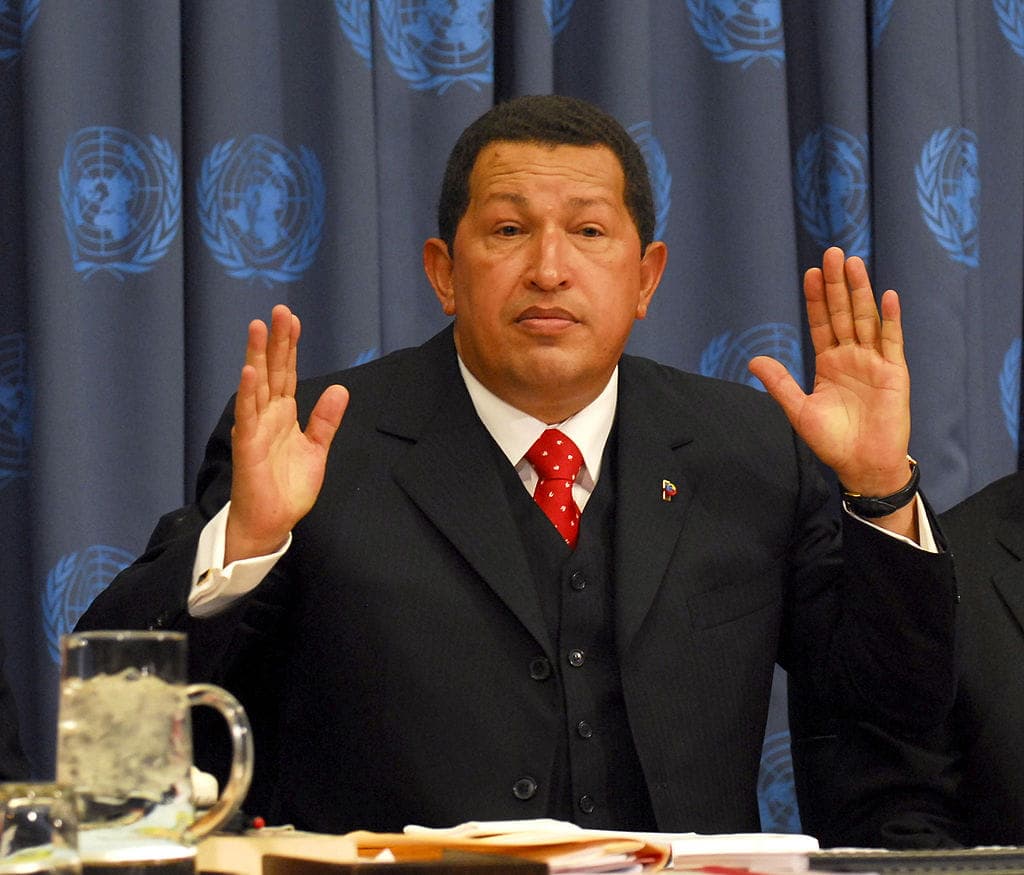
Leesa K. Donner: At this point, Pedro, I'd like to discuss civil liberties in Venezuela, or the lack thereof, that were emerging under strongman Hugo Chávez and his appointed successor Nicolás Maduro.
Pedro Burelli: Socialism – the model of the state providing and making decisions for citizens, basically assuming the role of decision-maker for all society – usually cannot deliver the goods, a consequence of a model that doesn't create any incentives for production but rather all kinds of disincentives for production.
Once you fail to deliver and frustration emerges, then you have to put it down through coercion. It comes through different ways. If you're in the street protesting, the police come out with water guns, and they try to stop you. If you are opining in the press, then you start putting censors on the press or even closing press outlets.
You get in a spiral. As people begin to criticize, the state begins to repress; as more people criticize, the state represses more; and you enter into a vicious circle, which is exactly what we lived with Nicolás Maduro, and what people lived in Cuba, what people lived in Nicaragua, literally what people lived in the Soviet Union. At some point, the system goes from promises and early successes to repression.
LKD: Or promises of prison, right?
PB: You have to stop, because when you think you can make all the decisions, you don't even conceive of leaving power because it comes with the idea that I know what's best for the population. I am delivering. It is other people who are making my life miserable. I'm going to silence them, and I'm going to hold on to power because I represent what's good for society. You get the idea of the permanence of power and the abuse of power. Both relate to each other because the more you abuse power, the more you're afraid of losing power.
LKD: Right. I'm going to go off script here and ask you, a lot of people are saying socialism, they didn't do it right. Venezuela, they made a mistake in how to make socialism work. We can make it work. But it's never worked for anybody, right?
PB: It's never worked. It's never worked. Even in the Nordic countries, Scandinavia, where there was a trial of very light socialism, it did not work because it just creates the wrong incentive. You've got to create the correct incentives so that the part of society that has ingenuity and wants to produce can produce. It is from that created wealth that you can live, but you cannot destroy the creative part of society, which you end up doing when the state assumes most of the decisions. The state decides what gets produced, where it gets produced, and at what price it gets produced and sold.
If you as a state decide that, as an experiment, you are going to give supermarkets, like in New York, and you’re going to sell at whatever price you think customers want. At some point, nobody's going to sell you goods because nobody can produce the goods at the price you want to sell it. Then you have to subsidize. Somebody's paying for you to get the price lower because the cost of the goods is here, and you're selling it below cost. The system always breaks down. There's no exception; you see it in the most extreme cases where it's communism, but in very advanced socialism, it always ends up with repression.
There is no way it ends up differently. That's why the system has failed. In Scandinavia, it did not end that way. With the level of education in that society, they simply changed the policies, went to more center-right governing, and gave up part of the system. They kept part of socialism – the state probably does a lot more things than in other countries. But what they give in the relationship finds people saying, okay, I'm willing to pay high taxes because I'm getting very good services. I'm paying high taxes, and I'm getting really good health. But it's a relationship in which the citizens are keeping the government in check.
That's as you move to the center right. You keep some elements in which a state delivers some goods, but there's more checks and balances. In socialism, when the state assumes the role, I know better what the people want, I know how to do it better than anybody. I can make better decisions than the citizens. That's where you always end up with problems. The truth of the matter is that having political skills to win an election has very little to do with producing goods and stuff.
On the Rocks
In Part 4 of this Liberty Nation News Special Report: Socialism: A Living Hell, thousands of Venezuelan citizens are now considered enemies of the state. Protesters disappear or are thrown into jail and tortured. Free speech, the right to assembly, and a free press are all things of the past. Now it is open rebellion against the powers that be. Unfortunately, things go from bad to worse when Hugo Chávez dies, and Nicolás Maduro comes into power.
Watch Part 3 Here:
4 Questions
The story, in brief
Why does Pedro Burelli say socialism in Venezuela led to tyranny?
Pedro Burelli says socialism puts the state in charge of making decisions for citizens and creates disincentives for production. When the system fails to deliver and frustration grows, he says the government responds with coercion. He describes a spiral in which criticism brings more repression, which he says happened under Nicolás Maduro.
How did civil liberties change in Venezuela under Hugo Chávez and Nicolás Maduro?
Civil liberties eroded as the government moved from promises to repression. Pedro Burelli says protesters were met by police, the press faced censorship, and some outlets were closed. The next section says free speech, the right to assembly, and a free press became things of the past.
What does Pedro Burelli say happens when the state controls production and prices?
Pedro Burelli says state control creates the wrong incentives and undermines the productive part of society. He explains that if the government sets prices below the cost of goods, producers will stop supplying them. Then subsidies are needed, and he says the system eventually breaks down.
What happens next in Venezuela after Hugo Chávez dies?
After Hugo Chávez dies, conditions worsen when Nicolás Maduro comes to power. Thousands of Venezuelan citizens are described as enemies of the state, and protesters disappear or are jailed and tortured. The next part says the situation becomes open rebellion against those in power.
Leesa K. Donner
Leesa K. Donner is executive editor of LibertyNation.com and Generation Liberty. A widely published columnist, Leesa previously worked in the broadcast news industry as a television news anchor, reporter, and producer at NBC, CBS and Fox affiliates in Charlotte, Pittsburgh, and Washington, DC. She is the author of “Free At Last: A Life-Changing Journey through the Gospel of Luke.”