
★ In this story 04
There are several reasons to visit South Dakota, including the beautiful monuments of Mount Rushmore and Crazy Horse. Bikers by the thousands visit the state for the annual Sturgis motorcycle rally, and outdoor lovers flock to the Black Hills for its scenic mountains and historic sites.
South Dakota became the 40th state to join the Union. Interestingly, on the same day and at the same time as North Dakota because President Benjamin Harrison purposely shuffled the paperwork so even he wouldn’t know which became a state first. However, North Dakota is assigned the 39th state because it comes first alphabetically. Located in the north-central region of the United States, South Dakota offers a unique blend of Native American traditions, pioneer history, agricultural strength, and stunning landscapes that attract visitors from around the world.
State Symbols
State Flower – American Pasqueflower
State Tree – Black Hills Spruce
State Bird – Ring-necked Pheasant
State Capital – Pierre
State Motto – “Under God the People Rule”
Just under 1 million residents call the Mount Rushmore State home. Considering it covers about 77,000 square miles of land, it is one of the least densely populated states. The Missouri River divides it into an eastern and western region, each with distinct characteristics. Western South Dakota features rugged terrain, dramatic rock formations, and the famous Black Hills, while the eastern region is made up of fertile farmland and rolling plains.
Before European settlement, the state had a history that dated back thousands of years. Native American tribes, particularly the Lakota Sioux, lived and thrived off the land for centuries. During the 19th century, westward expansion brought ranchers, miners, and settlers to the region.
The discovery of gold in the Black Hills in 1874 ignited significant growth and, unfortunately, conflict between the Native Americans and settlers. Some major historic events such as the Battle of the Little Bighorn (fought on what was then Montana territory) and the Wounded Knee Massacre are important chapters in both state and national history.
Montana’s Battle of the Little Bighorn – Or Is It South Dakota’s Battle?
The Battle of the Little Bighorn, also known as Custer’s Last Stand (named after Gen. George Armstrong Custer), took place on June 25-26, 1876, along the Little Bighorn River in south-central Montana. You may be wondering why a Montana battle has significance in South Dakota.
Well, the conflict began in South Dakota. Gold discovered in the sacred Black Hills in 1874 drew miners to land the Lakota had been guaranteed by treaty, pushing many to join Sitting Bull and Crazy Horse in resistance. After the Lakota victory, the United States seized the Black Hills in 1877, a dispute that still shapes the state today.
Carved in Stone, Shaped by Nature
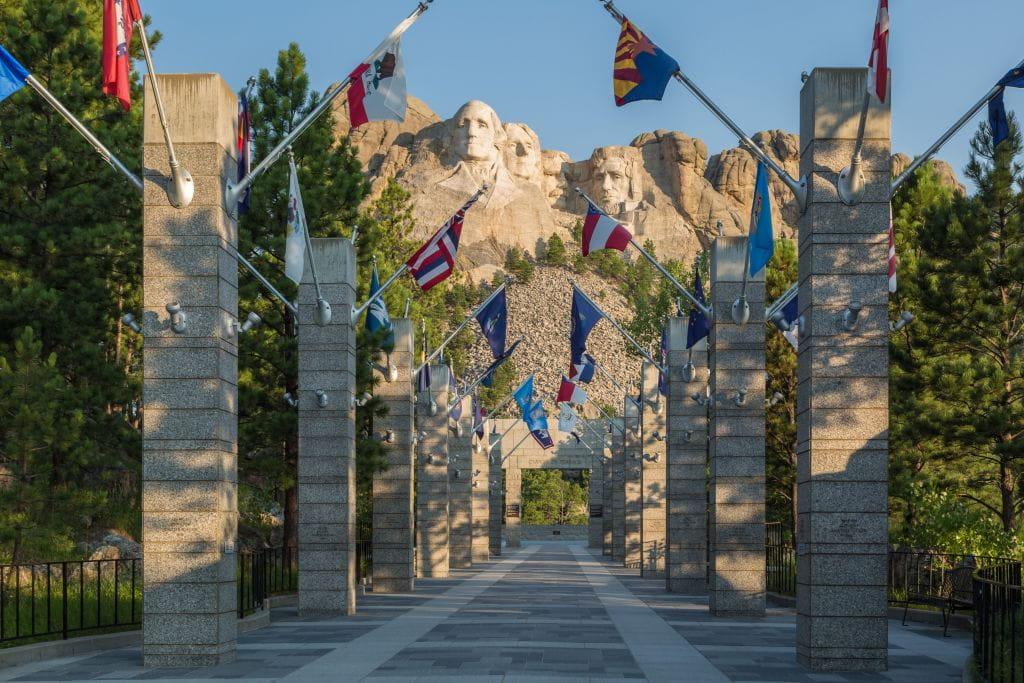
One of South Dakota’s most recognizable landmarks is the Mount Rushmore National Memorial, which is carved into a granite mountain in the Black Hills. The monument features the faces of four American presidents: George Washington, Thomas Jefferson, Theodore Roosevelt, and Abraham Lincoln. Nearby is the Crazy Horse Memorial, which honors the Native American leader Crazy Horse, still under construction, and plans to be the largest mountain-carving project in the world.
Badlands National Park is another famous destination. It is known for its colorful rock formations, deep canyons, and unique wildlife. Visitors can enjoy a variety of activities including hiking, photography, and wildlife viewing. Custer State Park offers tourists a remarkable scene of free-roaming bison on the state’s beautiful grasslands. The memorials and amazing natural attractions make South Dakota a prominent tourist destination and an important part of the state’s economy.
More to Offer Than Tourism
Aside from tourism, South Dakota is known for its contributions to the world of agriculture. It has been the backbone of its economy for many years due to its vast plains and fertile soil. Farmers and ranchers raise cattle, sunflowers, corn, soybeans, and wheat, helping it rank among the nation’s top producers of several agricultural products.
South Dakota culture reflects its diverse heritage. Native American powwows, county fairs, rodeos, and community celebrations play an important role in preserving traditions and bringing people together. Every year in August, motorcycle enthusiasts can enjoy the Sturgis Motorcycle Rally, one of the largest motorcycle gatherings in the world.
Today, South Dakota remains a state that honors its past while looking toward the future. It offers a remarkable combination of history, culture, and natural beauty. The Mount Rushmore State remains a place of pride for its residents and a fascinating destination for visitors.
4 Questions
The story, in brief
Why is South Dakota called the Mount Rushmore State?
South Dakota is called the Mount Rushmore State because Mount Rushmore National Memorial is one of its most recognizable landmarks. The monument is carved into a granite mountain in the Black Hills and features the faces of George Washington, Thomas Jefferson, Theodore Roosevelt, and Abraham Lincoln.
How did South Dakota and North Dakota become states on the same day?
South Dakota became the 40th state to join the Union on the same day and at the same time as North Dakota. President Benjamin Harrison purposely shuffled the paperwork so even he would not know which became a state first. North Dakota is listed as the 39th state because it comes first alphabetically.
Why does the Battle of the Little Bighorn matter to South Dakota?
The Battle of the Little Bighorn took place in south-central Montana, but the conflict began in South Dakota. Gold discovered in the sacred Black Hills in 1874 drew miners onto land the Lakota had been guaranteed by treaty, leading many to join Sitting Bull and Crazy Horse in resistance. After the Lakota victory, the United States seized the Black Hills in 1877, a dispute that still shapes the state today.
What are South Dakota's biggest attractions and industries today?
South Dakota is a major tourist destination because of Mount Rushmore, the Crazy Horse Memorial, Badlands National Park, Custer State Park, and the Sturgis Motorcycle Rally. Agriculture is also a backbone of the state's economy. Farmers and ranchers raise cattle, sunflowers, corn, soybeans, and wheat, making South Dakota a top producer of several agricultural products.

Kirsten Brooker
Culture Correspondent for Liberty Nation and Generation Liberty. Kirsten loves to write about culture from the point of view of an everyday American who lives deep in the heart of the Midwest. She is the mother of two adorable girls, likes classic rock, and humbly wears the crown of a former Homecoming Queen with grace and style.