
★ In this story 03
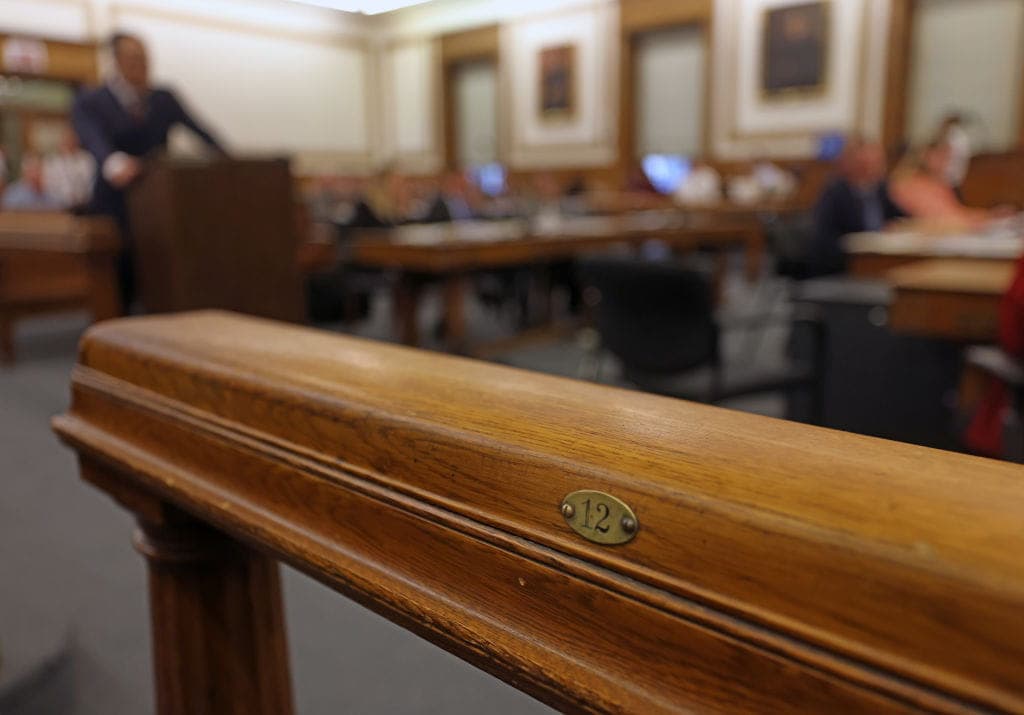
Serving on a jury is our civic duty, and with that duty comes great responsibility. When serving on a jury, people are supposed to make decisions based on evidence and the law. But what happens when the panel feels the law is unjust? Do they have any recourse? Jury nullification is something people have been using for centuries to get around laws they feel shouldn’t require punishment.
Colonial America
In 1735, more than 40 years before the Declaration of Independence, the case of Crown v. John Peter Zenger took center stage and is one of the earliest documented cases of jury nullification. Zenger was a printer and published the New-York Weekly Journal, a newspaper that criticized the colony’s royal governor, William Cosby. The colonial authorities charged him with seditious libel. “Seditious libel was defined as the intentional publication, without lawful excuse or justification, of written blame of any public man or of the law, or any institution established by the law,” the Historical Society of the New York Courts explained.
The problem for the printer was that under the English common law at the time, truth wasn’t considered a defense against the charge of seditious libel. The judge instructed jurors to decide whether Zenger had published the material, not whether the law was fair. Zenger’s attorney, Andrew Hamilton, appealed to the jury:
“The question before the Court and you, Gentlemen of the jury, is not of small or private concern. It is not the cause of one poor printer, nor of New York alone, which you are now trying. No! It may in its consequence affect every free man that lives under a British government on the main of America. It is the best cause. It is the cause of liberty.”
Even though no one denied the publication of the material in question, the jury returned a not guilty verdict.
Jury Nullification
Jury nullification is one of the more unusual powers jurors have in America’s justice system. It means that a jury can find someone not guilty even when members believe the person broke the law, because they disagree with the law itself or believe a conviction would be unjust. It’s a little confusing, though.
While juries have the practical power to do this, they generally don’t have the legal right to disregard a judge’s instructions. In 1895, Sparf v. United States made a legal distinction between a jury’s power and its rights. The Supreme Court ruled that federal criminal juries must take the law that the judge provides and apply it to the evidence, not decide for themselves what the law should be.
However, jurors don’t have to justify or disclose the reasons behind their verdict, and under the Fifth Amendment’s Double Jeopardy Clause, a not guilty verdict can’t be overturned by a judge or appealed by the prosecution.
Examples Through History
The Fugitive Slave Act of 1850 strengthened federal enforcement and penalized people who helped slaves escape. Some Northern juries refused to convict in these cases, even when the evidence showed the defendant had done as the law forbade. This was a way for abolitionists to resist the laws they considered immoral.
The Eighteenth Amendment brought about Prohibition in 1920, under which Americans were not allowed to manufacture, sell, or transport alcoholic beverages for ordinary consumption. Not everyone was happy about this, and in some communities, juries were reluctant to convict people who violated Prohibition laws.
Liberty isn't just about the laws our government makes. It's also about the people who are expected to follow and uphold them. Jury nullification gives everyday Americans a way to push back against laws they believe are unfair, but history shows that power hasn't always been used for the right reasons. The tricky part is deciding when refusing to enforce a law is standing up for liberty and when it's denying someone else the justice they deserve.
4 Questions
The story, in brief
What is jury nullification in America's justice system?
Jury nullification means a jury can find someone not guilty even when members believe the person broke the law. Jurors may do this because they disagree with the law itself or believe a conviction would be unjust. It is described as an unusual power in America’s justice system.
Why is the John Peter Zenger case linked to jury nullification?
In 1735, John Peter Zenger was charged with seditious libel after publishing criticism of New York’s royal governor, William Cosby. The judge told jurors to decide whether Zenger published the material, not whether the law was fair. Even though the publication was not denied, the jury returned a not guilty verdict.
What did Sparf v. United States say about jury nullification?
In 1895, Sparf v. United States drew a legal distinction between a jury’s power and its rights. The Supreme Court ruled that federal criminal juries must take the law from the judge and apply it to the evidence, rather than decide for themselves what the law should be. Even so, jurors do not have to explain the reasons for a not guilty verdict.
How has jury nullification been used in American history?
Some Northern juries refused to convict people accused under the Fugitive Slave Act of 1850, even when the evidence showed the defendant had broken the law. In some communities during Prohibition, juries were also reluctant to convict people who violated alcohol laws. These examples show how juries have sometimes pushed back against laws they saw as immoral or unfair.