
★ In this story 02
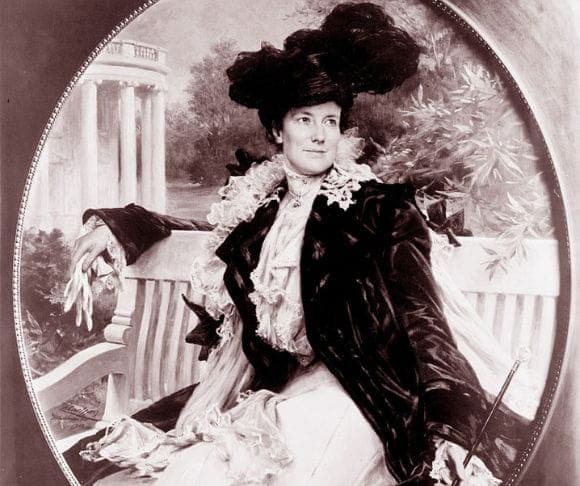
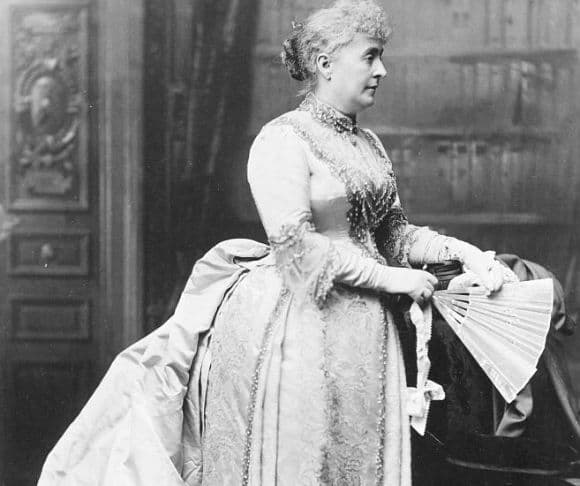
Caroline Harrison, who lived from October 1832 to October 1892, was not the kind of first lady who simply smiled politely, waved from a balcony, and disappeared behind a curtain. She had projects, opinions, artistic ambitions, and apparently a family large enough to make the White House feel like a very fancy compound.
Caroline was born to be educated. Her parents were notable educators Mary Potts Neal and the Reverend Dr. John Witherspoon Scott. Caroline, or “Carrie,” studied languages, music, and drawing at the Oxford Female Institute, graduating in 1852.
Destiny collided with Carrie when a student of her father’s moved much closer and began spending time with the family. The future president, Benjamin Harrison, became a fixture at the Scott dinner table.
They began their life together in Indiana. Benjamin, a brilliant legal mind, was quite popular and participated in his community. During the Civil War, Harrison earned the rank of brevet brigadier general – an honorary promotion given to a military officer for gallantry, bravery, or meritorious service. Harrison ran for governor and lost, then became a US senator and, eventually, the president.
They Didn’t Expect Carrie
When Caroline and President Benjamin Harrison moved into the Executive Mansion, they brought along family members from four generations. That is not a household; that is a small village with charm school table manners. The building quickly became crowded, which inspired Caroline to campaign for major expansion and renovation. She understood an important rule of family life: Eventually, someone will ask, “Who left this soup bowl here?” They needed room.
Caroline also refused to limit herself to the traditional duties of a social hostess. She established an active art studio in the White House attic, where she painted watercolors and designed her own china patterns. She even hosted china-painting classes for the wives of cabinet members and congressmen. In other words, while some people were making small talk at receptions, Caroline was upstairs hosting a painting party with good social snacking options.
Her official White House china design showed her pride in her Midwestern roots. Instead of choosing the usual floral decorations, Caroline selected ears of corn and goldenrod. Traditionalists were reportedly surprised. Perhaps they expected roses and found themselves staring at dinnerware that looked ready for the harvest. Still, the design was memorable, practical, and distinctly connected to her home region.
A Day in the Life of First Lady Harrison
The kitchen and pantries received the real makeovers first, but the next one was a big change at the Executive Mansion: electricity. It was all the rage. A skilled electrician named “Ike” Hoover was asked to stay on after the install, as the Harrison family was nervous about the new electric lights. This makes perfect sense. If a room suddenly glows without a candle, the safest response is obviously to keep the electrician nearby, just in case the ceiling starts doing anything suspicious.
There is a pattern with most US first ladies: Their interests reached beyond the White House. She served as the first president general of the National Society Daughters of the American Revolution, or NSDAR. She was also heavily involved with projects both in Indiana and Washington, DC, including 30 years on the board of managers of the Indianapolis Orphans Asylum. She campaigned for women to be admitted as students at Johns Hopkins Medical School, showing that her concern for women’s opportunities went far beyond social events and decorative plates.
During a speech to the NSDAR, she said: “Since this society has been organized, and so much thought and reading directed to the early struggle of this country, it has been made plain that much of its success was due to the character of the women of that era. The unselfish part they acted constantly commends itself to our admiration and example.”
She loved animals and spent time with her horses, chickens, and a billy goat named Old Whiskers that belonged to her grandchildren. The goat went AWOL, running as fast as he could go down Pennsylvania Avenue, followed by the president holding on to his top hat as he ran after it.
In 1889, Caroline brought the first Christmas tree into the White House. So, between the family crowd, the art studio, the electricity, and the enormous amount of china, the Harrison White House was probably never boring. Caroline Harrison combined creativity, determination, civic involvement, and a touch of humor. She proved that the first lady could decorate plates, improve a mansion, and support education. And what family with pets like Dash the collie, the aforementioned errant goat, and a pair of opossums named Mr. Reciprocity and Mr. Protection is not fun?
Caroline died of tuberculosis at age 60. She lived her life with heartland charm, an educated backstory, and the artist’s eye.
4 Questions
The story, in brief
Who was Caroline Harrison before she became first lady?
Caroline Harrison, called Carrie, was born to educator parents Mary Potts Neal and the Reverend Dr. John Witherspoon Scott. She studied languages, music, and drawing at the Oxford Female Institute and graduated in 1852. She later married Benjamin Harrison after he became close with her family.
What changes did Caroline Harrison make in the White House?
Caroline Harrison pushed for major expansion and renovation after moving into the Executive Mansion with family members from four generations. The kitchen and pantries were remodeled first, and electricity was added as a major new feature. She also created an art studio in the attic and designed official White House china with corn and goldenrod.
Why is Caroline Harrison remembered for more than hosting social events?
Caroline Harrison did not confine herself to the role of social hostess. She served as the first president general of the National Society Daughters of the American Revolution and spent 30 years on the board of managers of the Indianapolis Orphans Asylum. She also campaigned for women to be admitted as students at Johns Hopkins Medical School.
What notable events and personal details marked Caroline Harrison's years as first lady?
In 1889, Caroline Harrison brought the first Christmas tree into the White House. Her years there also included a memorable household filled with pets, including horses, chickens, a collie named Dash, two opossums, and a billy goat named Old Whiskers that once ran down Pennsylvania Avenue. She died of tuberculosis at age 60.