
★ In this story 03
Two women served as first lady during Woodrow Wilson's presidency: his first wife, Ellen Axson Wilson, and his second wife, Edith Bolling Galt Wilson. Although their personalities and approaches differed, both women used the position to support their husband’s presidency and advocate for causes they considered important. Ellen focused much of her attention on social reform and the welfare of impoverished families, while Edith took on a more private and protective role after her husband’s stroke. Combined, their time in the White House reflected the nation’s changing expectations and role of women in general and of the first lady.
An Artist Mind Oversees Dramatic Change in the DC Streets
Ellen Axson graduated from Art Students League of New York, worked in portraiture, and received a medal for one of her works from the Exposition Universelle (1878) in Paris. Like many ladies of her time, she was educated on how to be a good partner to a husband.
She married Woodrow Wilson when they were both out of school and ready to begin a lifetime together – he 28 and she 25. They both grew up in Georgia, and as a southern gal, Ellen once declared she would never give birth to children in a Union state. Her third child bucked that edict, though, and was born while the family was in Connecticut.
Ellen gave up her passionate pursuits and focused on becoming a good political wife. She even learned German so she could help translate German-language political science publications relevant to Woodrow's research. As First Lady, she drew sketches and painted in a studio set up on the third floor of the White House. During her time at the White House, she continued to paint, but exhibited her work under an assumed name, EA Wilson.
Ellen grew up in southern family that owned slaves. In spite of her background, in spite of not wanting her children to be born in Yankee territory, she championed legislation to end the humiliation and suffering of the mostly black population in DC that lived in alleyways and tents and slums. Ellen is responsible for the Alley Bill. She visited dilapidated alleys and then dragged any Congressman smart enough to placate a first lady along to also visit these alleys. The “Alley” bill was passed by the government on the day of her death, Aug 6, 1914.
"I am naturally the most unambitious of women and life in the White House has no attractions for me," she wrote to the Taft family, who came before the Wilsons in the White House. Like many first ladies before and after, Ellen gave the public role the dignity and grace it deserved but could not have cared less to be in the role in the first place.
After Ellen’s death, Wilson was rumored to be inconsolable. He wrote of his “intolerable loneliness and isolation.”
The Second of Two Wilson First Ladies
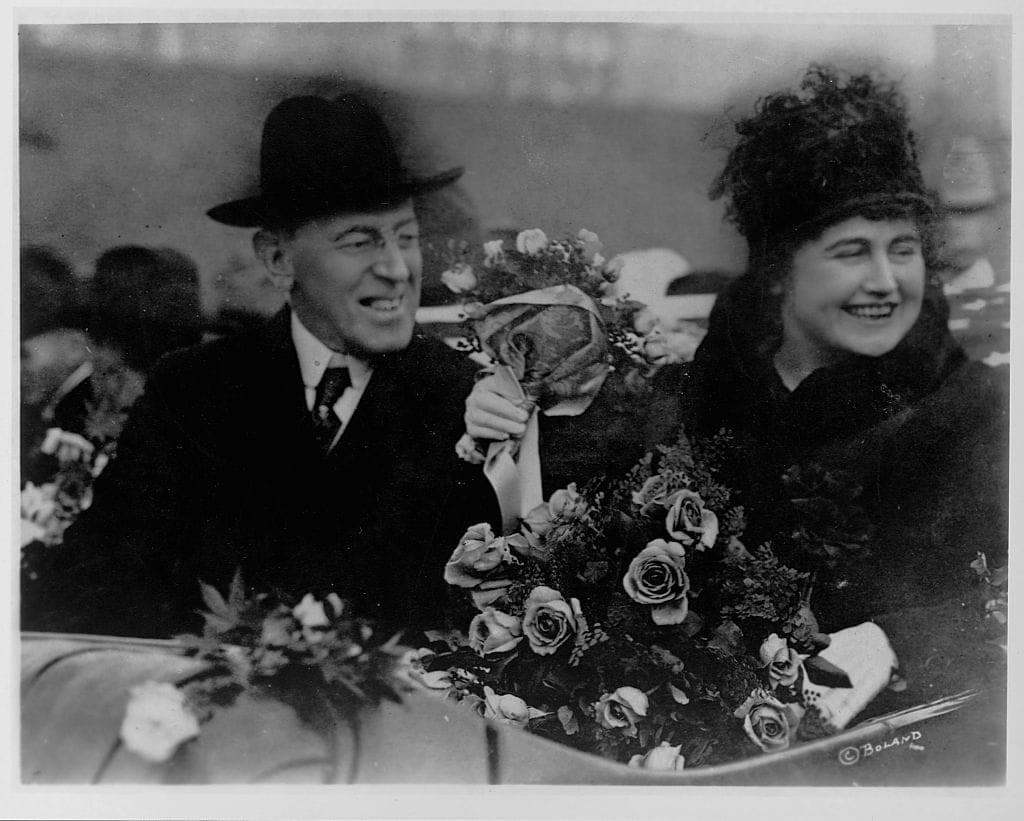
In the spring of 1915, President Woodrow Wilson fell in love with a local DC widow, Edith Bolling Galt. She was described in her day as a woman of beauty and charm. According to the local society column and gathering circles, she was a “fine figure of a woman – 5 feet 9 inches tall with blue/grey eyes and luxurious dark hair.” Wilson was smitten with the young woman 16 years his junior. Upon meeting the merry widow, White House staff recorded they were impressed, saying Edith was a “looker” and Woodrow was a “goner.”
Edith had been a wealthy lady in waiting for the right man, and who better than a sitting US president? But she certainly had her fair share of a tough home life financially as a kid. Her family, as southern planters, had to sell off the Virginia land they could no longer afford to farm once slaves were free people. Her education, although intense, was informal – overseen by her bedridden grandmother.
But Grandma taught her French, along with basic grammar and math. And as presidential spousal checklists go, Edith was a descendant of the first people to colonize what is Virginia, also a descendant of Mataoka, (Pocahantas), and was related to a hand full of Founding Fathers and several US presidents.
The whirlwind courtship settled after marriage. And when Woodrow had a debilitating stroke, Edith became, as she described, the steward of the nation. She was rumored by political opponents to be “running the country, but she did not. She did not initiate programs or try to control the executive branch. What she did do was carefully select matters that were the utmost important to her husband and then send the other issues to the heads of departments or in a stack for another day – even another administration.
The Ladies Who Altered the DC Landscape
Ellen established the iconic White House Rose Garden and promoted American crafts and folk arts. Finding a way in a socialite morass, she renovated the White House using art and crafts from Appalachian women, which led her to be named honorary president of the Southern Industrial Educational Association. She was also unafraid to tour the Home for the Incurables, the first first lady to do so.
Ellen made a safe space for Edith to change the things that mattered to her. But the second first lady Wilson inherited a world war, angry women at the front gate demanding the right to vote, and sheep grazing on the White House lawn. The sheep yielded 98 pounds of wool, which was then auctioned off to raise thousands of dollars for the relief efforts.
Ellen spent a year and a half as first lady while Edith held the position for a bit over five years. How will history remember the two Wilson first ladies?
4 Questions
The story, in brief
Who were the two first ladies during Woodrow Wilson's presidency?
Two women served as first lady during Woodrow Wilson's presidency: Ellen Axson Wilson and Edith Bolling Galt Wilson. Ellen was Wilson's first wife, and Edith was his second wife. Their personalities and approaches differed, but both used the position to support his presidency and causes they considered important.
What cause did Ellen Axson Wilson champion as first lady?
Ellen Axson Wilson focused much of her attention on social reform and the welfare of impoverished families. She championed legislation to end the humiliation and suffering of the mostly black population in Washington, D.C., who lived in alleyways, tents, and slums. She visited dilapidated alleys and brought congressmen with her, and the Alley Bill passed on the day of her death, Aug. 6, 1914.
How did Edith Bolling Galt Wilson help after Woodrow Wilson's stroke?
After Woodrow Wilson suffered a debilitating stroke, Edith Bolling Galt Wilson took on a private and protective role. She described herself as the steward of the nation, but she did not initiate programs or try to control the executive branch. Instead, she selected matters most important to her husband and sent other issues to department heads or set them aside for later.
How did Ellen and Edith Wilson leave different marks on the White House?
Ellen Axson Wilson established the White House Rose Garden, promoted American crafts and folk arts, and renovated the White House with art and crafts from Appalachian women. Edith Bolling Galt Wilson faced a world war and women demanding the right to vote at the White House gates. During her time, sheep grazed on the White House lawn, and their wool was auctioned to raise thousands of dollars for relief efforts.