
★ In this story 03
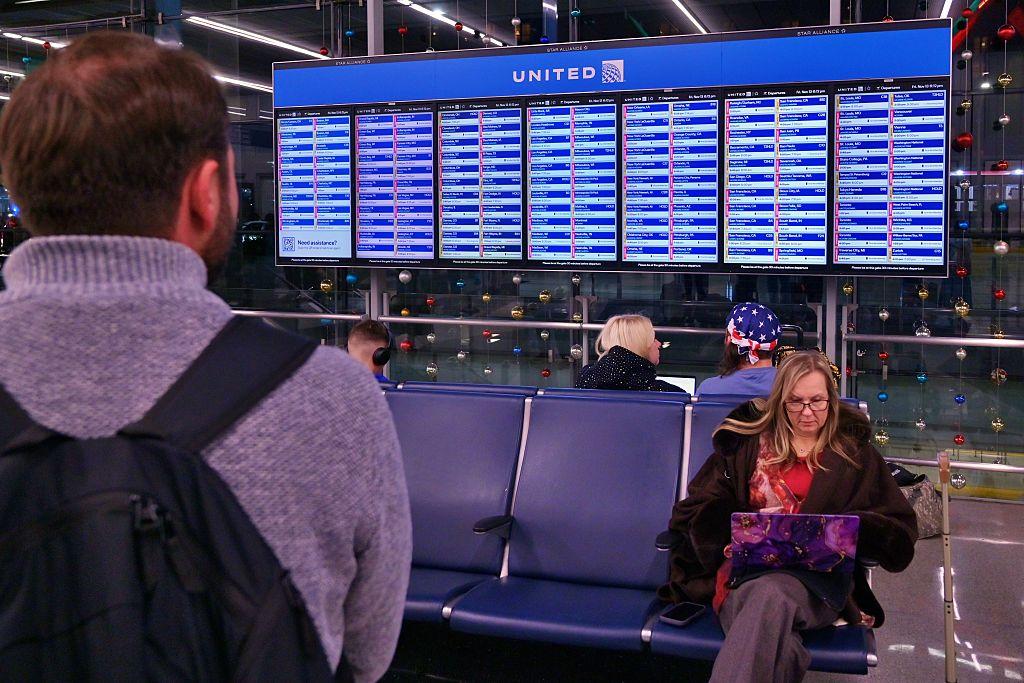
Imagine showing up to the airport on a Friday afternoon, bags packed and boarding pass ready, only to find out nobody is flying. Not just at your gate – no one in the entire United States. On Friday, November 13, hundreds of thousands of passengers across the US didn’t have to imagine it. Thanks to a critical system failure, the Federal Aviation Administration (FAA) halted departures at every US airport. Thousands of flights were delayed or canceled.
From System Failure to Canceled Flights
How could a single technological glitch stop air traffic in the US? Well, it helps to understand the scale of the industry and what air traffic control actually does. You see, according to the FAA, the US air traffic system handles more than 45,000 flights on an average day, moving roughly 2.9 million passengers, and there are typically thousands of planes in the air over the US at any given moment.
Pilots don’t simply look out of the cockpit window and see where other planes are. Every commercial flight moves through a tightly choreographed invisible highway in the sky, guided from takeoff to landing by a network of Air Route Traffic Control Centers and radar facilities.
This system relies on constant and instant communication – sharing radar data, weather updates, flight plans, etc. If that communication network stumbles, though, controllers can no longer track the thousands of planes, loaded down with passengers and zipping around the nation at 500 miles per hour.
That’s what happened on Friday, around 3:30 p.m. Eastern. As Transportation Secretary Sean Duffy explained on Saturday (Nov. 14), a telecommunications outage was probably caused by overloaded routers. When controllers can’t trust their screens or reliably pass on the information to each other and to the pilots in the sky, safety demands a simple response: Prevent new planes from taking off and try to safely land the thousands already in the air.
And because of how the whole air traffic system works, grounding planes for four hours doesn’t create a four-hour delay – it backs the system up for days. By Saturday morning, more than 9,100 flights had been canceled and more than 7,000 delayed, leaving planes, crews, and passengers in the wrong cities for days.
Copper Wires in the Fiber-Optic World
Friday’s shutdown was only the third nationwide emergency ground stop issued by the FAA in US history. The first was after the terror attack of September 11, 2001, and the second was a computer system failure in January 2023. Experts have warned for years that the system holding America’s air traffic together is outdated and running on borrowed time.
While modern passenger jets are essentially flying supercomputers, much of the ground infrastructure guiding them relies on decades-old technology. For years, the FAA has depended on aging copper-wire telecommunications lines, outdated switches, and legacy radar equipment that is expensive to maintain and increasingly prone to failure. In some facilities, controllers have only recently begun phasing out paper flight strips – physical slips of paper passed by hand to track aircraft.
Even upgrading that aging system is fraught with risk. Officials noted that Friday’s communications breakdown occurred amid an ongoing, multi-decade effort to transition the FAA’s communications backbone from old copper wiring to modern fiber-optic lines. When new digital hardware tries to talk to legacy switches and routers built for a different technological era, bottlenecks and system crashes become far more likely.
Secretary Duffy called the outage an emergency and urged Congress to approve tens of billions of dollars in additional modernization funding on top of the $12.5 billion lawmakers already appropriated in 2025.
Why It Matters
It is easy to think of a nationwide flight grounding as just a headache for business travelers or families trying to get home for the weekend. In reality, modern aviation is one of the primary arteries of the American economy – moving everything from overnight medical supplies and fresh food to factory parts and mail. When the skies close, commerce slows down right alongside passenger travel.
More importantly, Friday’s breakdown highlights a deeper problem with how the federal government manages critical infrastructure. In the private sector, companies that fail to upgrade outdated technology quickly lose customers to competitors that innovate faster and keep their systems reliable. Government monopolies, on the other hand, face no competition – meaning antiquated systems often limp along for decades until a crisis forces lawmakers to scramble for emergency cash.
As you get ready to travel for college, work, or family holidays in the years ahead, the reliability of America’s skies will depend on whether Washington can finally bring its 20th-century infrastructure into the 21st century. Keeping the country moving safely requires more than just massive spending bills; it requires accountability, smart engineering, and ensuring that the technology guarding our skies is at least as modern as the planes flying through them.
4 Questions
The story, in brief
Why did the FAA ground all flights nationwide on November 13?
The FAA halted departures at every US airport after a critical telecommunications outage around 3:30 p.m. Eastern. Transportation Secretary Sean Duffy said the outage was probably caused by overloaded routers. When controllers could not trust their screens or reliably share information, safety required stopping new takeoffs and landing planes already in the air.
How many flights and passengers were affected by the FAA shutdown?
The US air traffic system normally handles more than 45,000 flights a day and moves about 2.9 million passengers. By Saturday morning, more than 9,100 flights had been canceled and more than 7,000 delayed. The disruption also left planes, crews, and passengers in the wrong cities for days.
Why is the FAA air traffic system vulnerable to failures like this?
Much of the ground infrastructure guiding flights still relies on aging copper-wire lines, outdated switches, and legacy radar equipment. Officials said the breakdown happened during a long transition from old copper wiring to modern fiber-optic lines. When new digital hardware tries to work with older switches and routers, bottlenecks and system crashes become more likely.
What happens next after the FAA nationwide ground stop?
Secretary Sean Duffy called the outage an emergency and urged Congress to approve tens of billions of dollars in additional modernization funding. Lawmakers had already appropriated $12.5 billion in 2025. The reliability of future air travel will depend on whether Washington can update the system with modern technology, accountability, and smart engineering.