
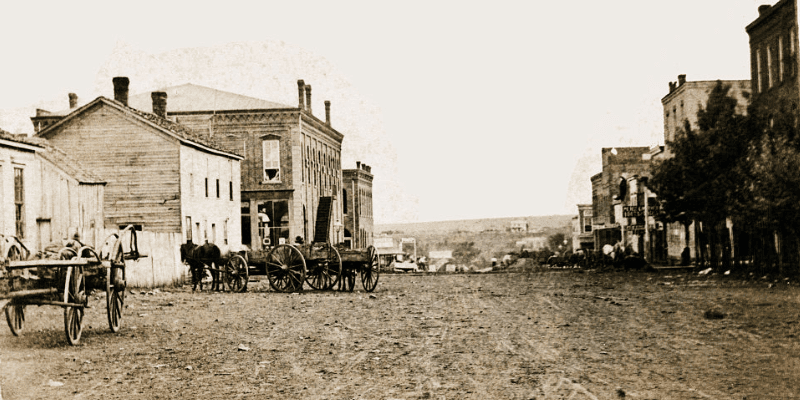
Before Kansas was Kansas, it was populated by the indigenous people known as the Paleo-Indians. The state got its name from the Kansa or “Kaw” tribes that lived there. Other native groups inhabited the area, too, including the Arapaho, Comanche, Kiowa, and Pawnee.
In 1541, Francisco de Coronado, a Spanish explorer, became the first known European to visit the area. He sought gold but left when he didn’t find any. In 1682, Robert Cavelier de La Salle, a Frenchman, came across the land and claimed it for his country.
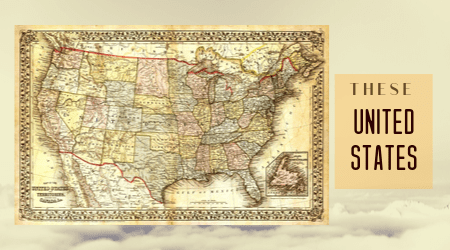
The area was relatively untouched under French rule for many generations until it was sold to the United States as part of the Louisiana Purchase in 1803. As U.S. territory expanded, thousands of settlers used trails through Kansas on their route seeking to homestead out west. Forts were built along the Santa Fe and Oregon Trails to keep the travelers safe, and people started to make their homes near the structures.
In 1853, Fort Riley was built to protect the settlers traveling along the trails. A few years later, in 1866, none other than General George Armstrong Custer organized the 7th Cavalry at the military stronghold. Custer is infamous for the attack he led on the Sioux and Cheyenne tribes in 1876 at the Battle of Little Bighorn.
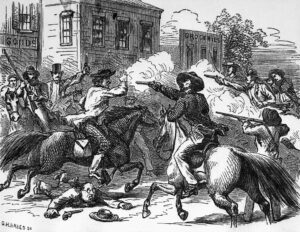
Up to this point, Kansas was not an official region – the territory was created with the Kansas-Nebraska Act of 1854. The law marked a monumental and dangerous time for the people. After Congress passed the legislation, citizens started arguing over slavery and whether it should be allowed. The debate became so volatile that fights broke out constantly between the abolitionists who were against slavery and the so-called “Border Ruffians” who fought to keep the institution going. In fact, there was so much hostility and bloodshed between the two groups that the territory became known as “Bleeding Kansas.”
John Brown was a leader of the abolitionists who hoped to begin a slave liberation movement. His fateful action to hold a raid on the federal armory in Harper’s Ferry, Virginia, is believed to have been the start of the Civil War.
Kansas became the 34th state to join the Union on January 29, 1861. When the Civil War broke out shortly after, the new state fought on the side of the North against slavery. It had the highest number of casualties compared to any other state in the Union. After the war, the people settled back into the life of ranching and cowboys with cattle towns popping up across the land. Just like a scene from a wild west movie, gunfights were common and the times were dangerous.
Kansas later became part of the setting and inspiration for L. Frank Baum’s The Wizard of Oz and Dorothy’s famous words, “Toto, I’ve a feeling we’re not in Kansas anymore.”