
★ In this story 02
Did you know Earth has a sister planet? Some even use the term evil twin! Venus is similar to Earth – it is the only other of the inner planets with any significant atmosphere. Yet it’s still alien enough to earn evil twin status.
Earth’s Evil Twin
Venus isn’t evil, of course – but it might seem so to anyone from Earth who dared to visit. At our current level of technology, it would take several months to get to Venus – and a manned mission might last a year or slightly longer, counting time spent studying the planet up close and the return trip. That’s considerably closer than our next nearest neighbor, Mars. But any attempt to land on the planet would be problematic.
Venus has an atmosphere considerably thicker than that of Earth, and it’s primarily made up of sulfuric acid and carbon dioxide. Aside from being toxic to breathe, this combination creates a greenhouse effect, bringing surface temperatures as high as 900 degrees. To make matters worse, the pressure on the planet’s surface is more than 90 times higher than that on Earth. Even probes don’t do well in this extreme environment. The Venera 13 and 14, both launched by Russia, are two record-holders when it comes to surviving Venus. The 13 lasted a whole 57 minutes, and the 14 managed an impressive 127 minutes.
https://GenerationLiberty.com/wp-content/uploads/2025/09/Venus-A-Year-In-a-Day-full-Compressed.mp4
Venus is often called Earth’s sister because it’s the only other inner planet with a significant atmosphere, and it’s about the same size as Earth. But with the crushing pressure, the unimaginably hot temperatures, the toxic atmosphere, and the clouds of sulfuric acid, it’s no wonder some people go beyond sister and call it evil twin.
Venus is our closest neighbor, though. As the second planet in the solar system, it averages about 67 million miles from the sun. With that tighter orbit, Venus completes its year – one trip around the sun – in just 225 Earth days. But due to the planet’s extremely slow rotation, taking 243 Earth days to completely rotate once, the days on Venus are actually longer than the years.
Venus – From Goddess of Love to Bringer of Peace
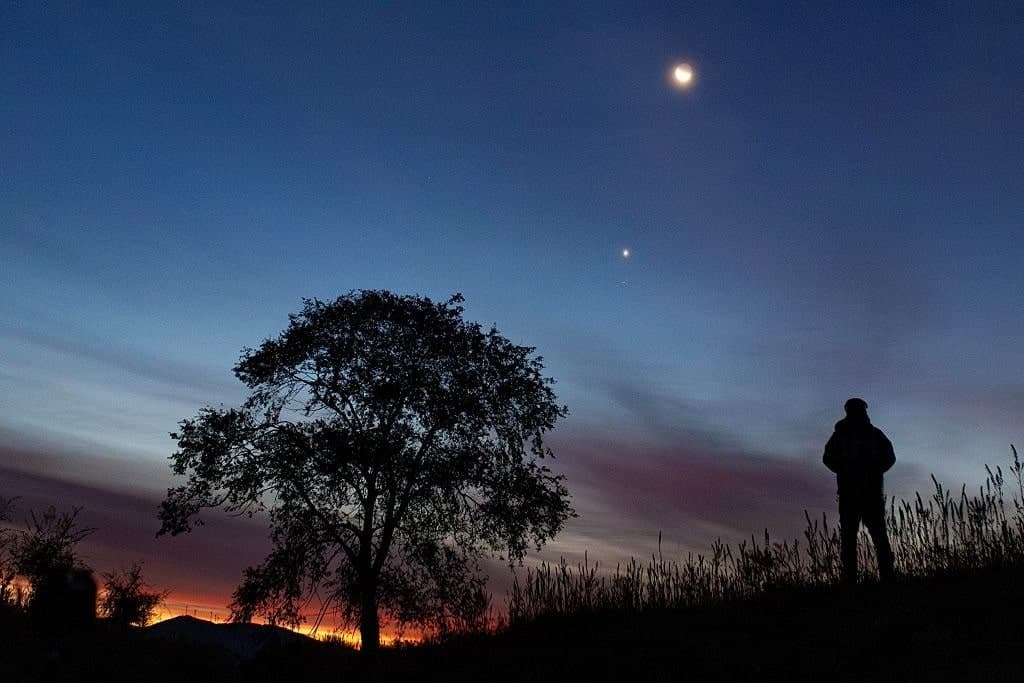
Venus is one of the handful of planets visible with the naked eye in the night sky, and so it has been known since antiquity. It’s often one of the brightest objects we can see, and other common nicknames include morning star and evening star.
In Roman mythology, Venus was the goddess of love and beauty. The Greeks called her Aphrodite. To the ancient Chinese, Venus represented Taibai Jinxing (the Great White Golden Star), a deity associated with metal who could transform himself into a handsome young man.
In English composer Gustav Holst’s The Planets, “Venus, the Bringer of Peace” is the second movement. The music represents Venus, the Roman goddess. It’s slower and more sublime than the first, the loud, angry “Mars, the Bringer of War.” Holst conceived the second as a calm response after the noise and drama of “Mars.” Imagine a planet that would burn you up almost immediately and then crush your remains being the extraterrestrial mascot of peace and love and beauty!
Test Your Knowledge – Take the Quiz
Try a quiz based on this article
Venus is Earth’s:
Show the answer
Sister planet.
Venus’ atmosphere is primarily made up of sulfuric acid and:
Show the answer
Carbon Dioxide.
Surface temperatures on Venus can reach up to 900 degrees.
Show the answer
True.
Venera 13 and 14 are probes sent to Venus by:
Show the answer
Russia.
The first of the probes (Venus 13) lasted for 57 minutes on Venus, while Venus 14 survived for:
Show the answer
127 minutes.
Venus completes its trip around the sun – one year – in 225 Earth days.
Show the answer
True.
Venus is one of the planets that can be seen with a naked eye from Earth and is often very bright, earning it the common nicknames Morning Star and:
Show the answer
Evening Star.
In Roman mythology, Venus was the goddess of:
Show the answer
Love and Beauty.
The Greeks called Venus:
Show the answer
Aphrodite.
Composer Gustav Holst named the second movement of his musical, The Planets, “Venus, the Bringer of Peace.”
Show the answer
True.