
★ In this story 03
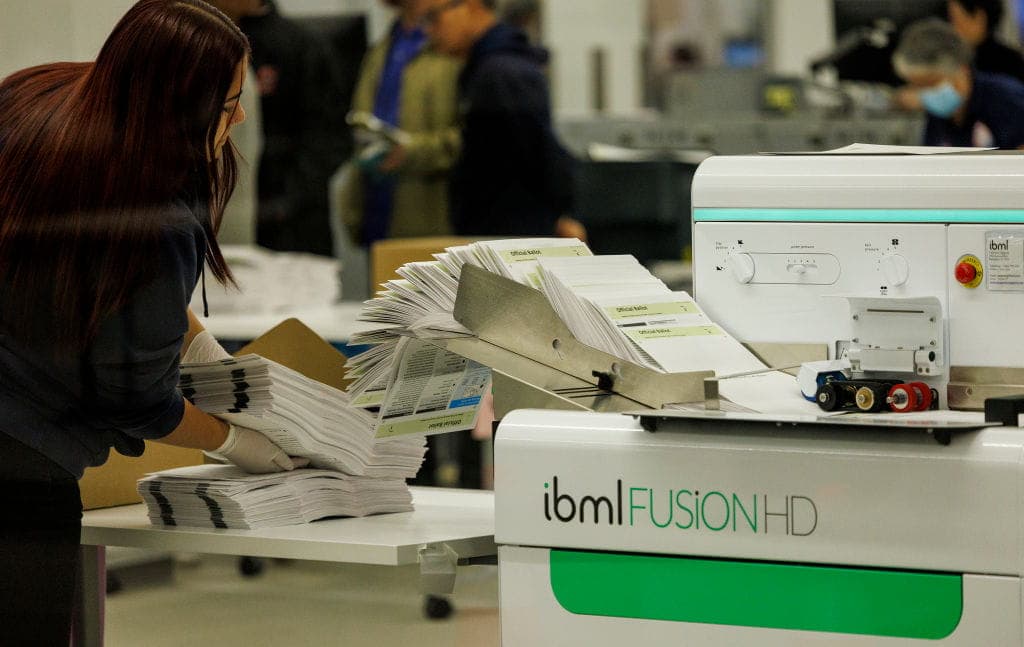
Before starting to write this article, I asked my 14-year-old daughter what she thought was happening in the photo. Her first guess was a woman grabbing papers from a printer. That’s close, but what she is actually doing is collecting a ballot from every citizen who cast a vote during election time.
On Nov. 3, 2026, voters across the nation will participate in the federal midterm elections. These determine who will hold all 435 seats in the House of Representatives, about one-third of the Senate, and 36 governorships, along with other state and local offices. Below that are ballot measures, also called propositions, that are questions put directly to voters, who pass or fail them through direct democracy on such topics as laws, policies, tax increases, and constitutional amendments. But how are votes cast and counted? Let’s find out.
Every Ballot Counts
Voting is one of the most important ways eligible citizens can participate in government. Our Founding Fathers ensured that the people of the nation have a say in the way the country is run by voting. The election and voting process varies from state to state, and voters may have several ways to cast a ballot.
- In-person voting is the most popular. Voters go to an assigned polling place on Election Day to cast a ballot in person. Voting technology ranges from pencil and paper to voting machines, such as direct recording electronic devices (DREs) and ballot-marking devices (BMDs).
- Early in-person voting is an alternative for those who have scheduling conflicts or prefer not to wait in long lines. As of 2026, 47 states and Washington, DC, offer no-excuse early in-person voting. Alabama, Mississippi, and New Hampshire do not, although eligible voters in those states may have absentee-voting options. Procedures and terminology vary by jurisdiction.
- Absentee voting, or voting by mail, allows citizens to vote without visiting a polling place on Election Day. Rules vary across the country. As of 2026, 13 states – including Alabama, Kentucky, and Indiana – require most voters to provide an acceptable excuse to obtain an absentee ballot by mail, while other states offer no-excuse absentee voting or automatically mail ballots to voters.
Eight states (plus DC) have adopted all-mail voting. In this case, every registered voter receives a ballot without having to request one. The states that participate are California, Colorado, Hawaii, Nevada, Oregon, Utah, Vermont, and Washington. Vermont does all mail-in voting for general elections only.
DREs and BMDs
DREs and BMDs are different types of equipment used for in-person voting. A direct-recording electronic system records voters’ selections electronically through an interface that may include a touchscreen or other controls; some DREs also produce a voter-verifiable paper audit trail. A ballot-marking device, by contrast, helps a voter make selections and produces a paper ballot on record that is then cast and usually scanned for tabulation.
BMDs provide accessibility features such as audio instruction, tactile controls, screen-reading support, and adjustable display, allowing many voters with disabilities to vote independently and privately. Some jurisdictions make BMDs available to all voters, while others provide them primarily as an accessible option. Their use and configuration vary across the country.
An upside to BMDs is that a paper is printed out once a person has finished voting that allows the voter to verify that his or her votes were recorded correctly. The papers, once turned in, are then fed into a separate scanner that tallies the entries.
Getting the Results
While all parts of the election process are important, accurate tallying of the votes is arguably the most crucial part. So how are they counted and verified? American elections use a layered system to check and double-check that votes are counted thoroughly and accurately. The rules for counting vary from state to state, but the general process is as follows.
Election administration is decentralized across thousands of state and local jurisdictions. Depending on state and local laws, election officials may be elected, appointed, or hired, and poll workers assist with voting and ballot handling. Authorized observers may monitor parts of the process under specific rules based on their location. Ballot transportation and chain-of-custody procedures also vary, but jurisdictions commonly use documentation, seals, bipartisan teams, or other controls to account for ballots and voting equipment.
Chain-of-custody records document the handling of ballots, containers, and voting equipment according to state and local procedures. Mail ballot officials may verify information on a return envelope, such as a signature or identification number. In-person voters generally confirm eligibility through registration records and any identification requirements rather than by matching a ballot signature. When a mail ballot has a correctable problem, many states provide a cure process that gives the voter a period of time to resolve it.
After required checks are completed, paper ballots may be counted by optical scanner, central-count equipment, or hand counting, depending on jurisdiction and ballot type. Votes cast on some DRE systems are recorded electronically rather than on scanner-fed ballots. Election officials reconcile vote totals with the number of voters and ballots, and post-election audits compare a sample of paper records with reported results to test the accuracy of the tabulation.
Certification is the formal process by which the appropriate state or local authority confirms the official election results after canvassing and other required checks. Public access and meeting procedures vary. A recount may occur before or after certification, depending on state law, and may be automatic because of a close margin or request by a candidate or other eligible party within a specified deadline.
Elections and ballot counting are painstaking and tedious processes. But they are important to the citizens of the United States. Thorough and accurate counting ensures that voting is done fairly and honestly and that the people's voices are heard.
4 Questions
The story, in brief
What offices are on the Nov. 3, 2026 federal midterm election ballot?
Voters across the nation will help decide who holds all 435 seats in the House of Representatives, about one-third of the Senate, and 36 governorships. Ballots can also include other state and local offices, plus ballot measures or propositions on laws, policies, tax increases, and constitutional amendments.
How can Americans cast ballots in the 2026 elections?
Eligible citizens may vote in person on Election Day, vote early in person where it is offered, or vote absentee by mail depending on state rules. Some states require an excuse for absentee voting, while others allow no-excuse absentee voting or automatically mail ballots to registered voters under all-mail systems.
What is the difference between DREs and BMDs in voting?
A direct-recording electronic system records a voter's selections electronically through an interface such as a touchscreen or other controls. A ballot-marking device helps a voter make selections and then prints a paper ballot that is cast and usually scanned, and it can include accessibility features that help many voters with disabilities vote independently and privately.
How are ballots counted and election results verified in the United States?
Election rules vary by state and locality, but officials use multiple checks to account for ballots and voting equipment, including chain-of-custody records and envelope or eligibility verification. After ballots are counted by scanners, central-count equipment, hand counting, or some electronic systems, officials reconcile totals, conduct post-election audits, and complete certification, with recounts possible under state law.

Kirsten Brooker
Culture Correspondent for Liberty Nation and Generation Liberty. Kirsten loves to write about culture from the point of view of an everyday American who lives deep in the heart of the Midwest. She is the mother of two adorable girls, likes classic rock, and humbly wears the crown of a former Homecoming Queen with grace and style.