
★ In this story 03
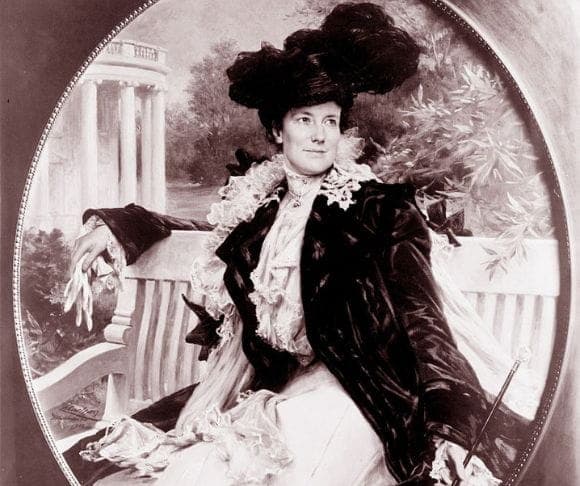
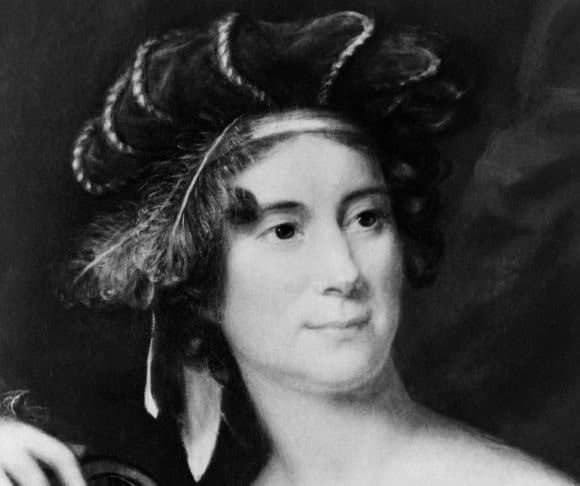
Louisa Catherine Johnson Adams (1775–1852) was the wife of John Quincy Adams, the sixth president of the United States. She was also the first first lady born outside the US — she was born in London, England.
Louisa Adams – Early Life
Louisa Adams was born on February 12, 1775, to Joshua and Catherine Johnson. Her father was an American, but her mother was English. Because her family moved between countries during and after the American Revolution, Louisa grew up hearing and speaking both English and French. For a time she studied at a convent school in France, where she learned music and languages. She loved to read and play the piano and harp.
Meeting John Quincy Adams
Louisa met John Quincy Adams in London, where her father served as the US consul. After a six-month courtship and many letters, they married in London on July 26, 1797. Soon after, her father’s business failed, and the young couple had to live very modestly on John Quincy’s diplomatic salary. This taught Louisa to be careful with money and patient during long separations while her husband worked.
For a time, John Quincy Adams served as US minister to Prussia (today’s Germany and Poland). Louisa became popular in high society and learned the customs of European courts, which helped her husband’s work. Later, after the War of 1812, Louisa Adams made one of the most famous journeys of any first lady-to-be. In the winter of 1815, she traveled six weeks across war-shaken Europe from St. Petersburg in Russia to Paris, the capital city of France, bringing their young son to join his father. She managed language barriers, soldiers’ checkpoints, and bad weather.
Louisa sometimes felt out of place in Massachusetts, where the Adams family lived. She had grown up in Europe with music, different languages, and a different style of manners. At first, she and Abigail Adams —her famous mother-in-law who was married to America’s second president, John Adams — didn’t understand each other, but over time they gained respect for one another.
First Lady (1825–1829)
When John Quincy Adams became president, Louisa was 50 years old. Washington, DC, could be harsh and political, but Louisa used her strengths, such as conversation, music, and hospitality, to bring people together. Earlier, during the run-up to the 1824 election, she held Tuesday evening gatherings with dinner and dancing to help her husband meet key visitors. As first lady, she continued hosting concerts and receptions, often playing the harp or piano for guests.
Louisa Adams wrote letters, stories, poems, and even plays. Her writing shows a thoughtful woman who noticed how people behaved and how events affected families. She sometimes struggled with sadness and poor health, but she kept expressing herself through her writing. After John Quincy lost his reelection bid in 1828, the couple faced a deep family sorrow when their son George died.
After the presidency, John Quincy Adams served for 17 years in the US House of Representatives. Louisa returned with him to Washington and helped with important causes. At the time, the House passed a rule called the “gag rule” that tried to block antislavery petitions from even being read. Louisa quietly sorted, listed, and summarized the thousands of petitions that arrived so her husband could fight that rule. The gag rule was finally lifted in 1844. These years also pushed both John Quincy and Louisa to support women’s right to speak in public.
John Quincy Adams collapsed at his desk in 1848 and died two days later with Louisa nearby. Louisa herself died in May 1852. Her funeral was attended by the president and leading officials, and Congress adjourned — a rare honor that showed how much respect she had earned.
Test Your Knowledge – Take the Quiz
Try a quiz based on this article
Louisa Adams, the wife of the sixth president, John Quincy Adams, was born in which country?
Show the answer
England.
What two instruments did Mrs. Adams love to play?
Show the answer
Piano and Harp.
For what reason did Louisa make a grueling six-week trip from Russia to Paris?
Show the answer
To unite her young son with his father.
Who was Louisa’s mother-in-law?
Show the answer
Abigail Adams.
How old was Louisa when her husband, John Quincy Adams, became the US president?
Show the answer
50.
Mrs. Adams used her strengths, such as music, conversation, and hospitality, to bring people together.
Show the answer
True.
What happened in 1828 that caused John Quincy and Louisa great sorrow?
Show the answer
Their son George passed away.
After his presidency, John Quincy Adams served for 17 years in:
Show the answer
The US House of Representatives.
Louisa helped her husband to fight against a rule that would block anti-slavery petitions from being read, which was called:
Show the answer
The Gag Rule.
John Quincy Adams died in 1848 with Louisa at his side. Louisa died just years later in May of:
Show the answer
1852.